
United Kingdom Visa Types Explained: Which UK Visa Is Right for You in 2026?
A complete guide to United Kingdom visa types in 2026
WHAT YOU NEED TO KNOW
- The UK visa system is organised around purpose: visiting, studying, working, joining family or settling permanently.
- Not everyone needs a visa. Depending on your nationality, you may only need an electronic travel authorisation or nothing at all for a short visit.
- Work visa requirements changed significantly in 2025 and 2026, including a higher salary threshold and a stricter English language requirement for Skilled Worker applicants.
- Family visas cover several different routes including partner, fiancé, child, and dependent relative, each with its own requirements.
- The eVisa has now fully replaced the Biometric Residence Permit as proof of UK immigration status.
Do You Even Need a Visa? Visa, ETA, or Neither
Not everyone travelling to the UK needs a visa at all. Depending on your nationality and purpose of travel, you may need a full visa, a lighter electronic travel authorisation or nothing beyond a valid passport.
British and Irish citizens don't need either. Nationals from a defined list of countries, including much of Europe, the United States, Canada and Australia, generally need an ETA rather than a full visa for short visits. Everyone else is generally classed as a visa national and needs to apply for a visa in advance, regardless of the length or purpose of their stay.
There's a genuinely important transitional point worth knowing about right now. Some travellers who booked and paid for their journey before 3pm on 5 March 2026, and who arrived before 3pm on 16 April 2026, can still rely on an ETA they already hold even in circumstances that would otherwise require a visa. Outside that narrow window, the standard rules apply.
If you're at all unsure which category you fall into, the official check if you need a UK visa tool on GOV.UK is the most reliable way to confirm it before you plan anything further.
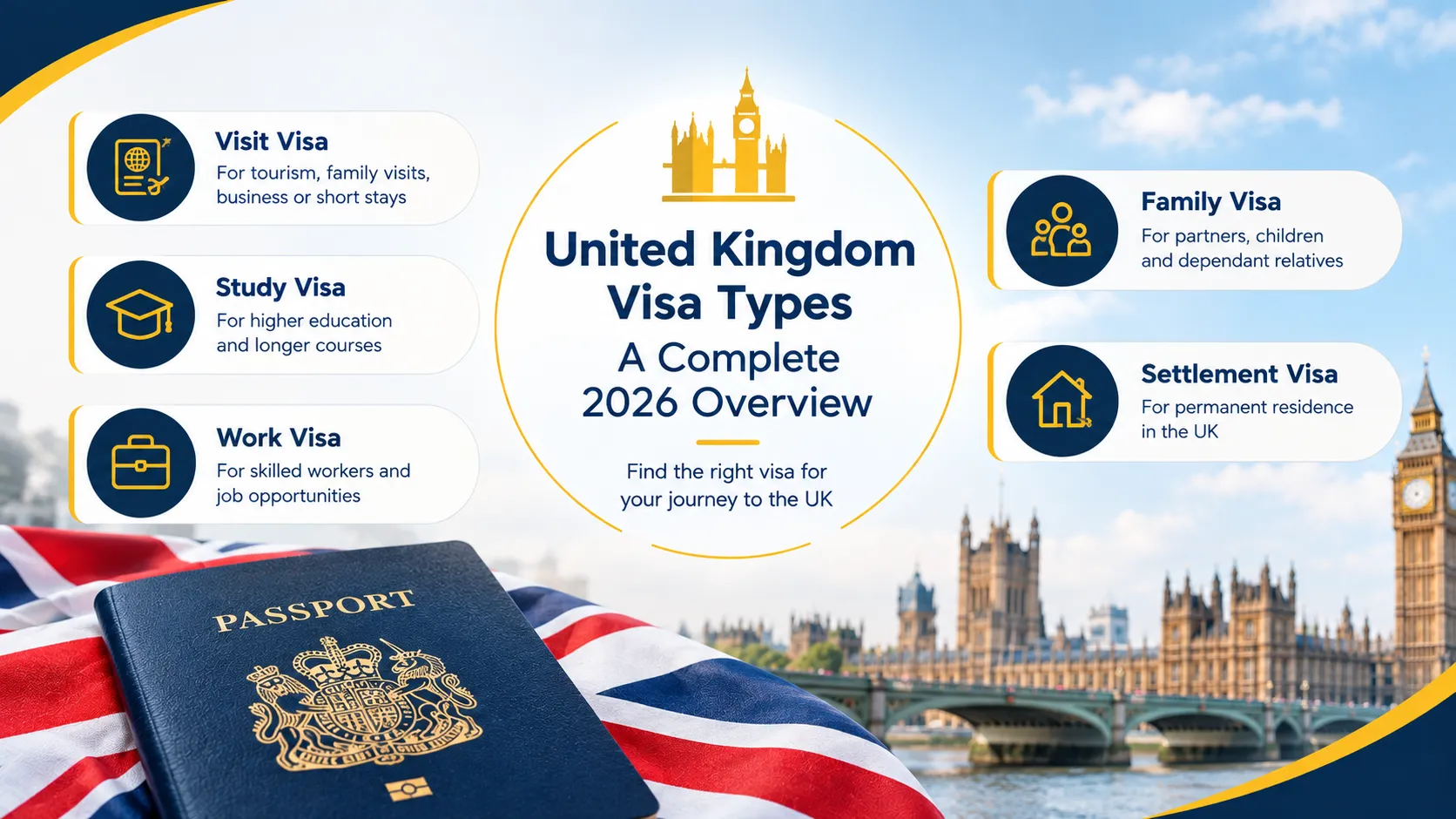
UK Visit Visas: Standard Visitor and Short Stays
The Standard Visitor visa covers most short term visits to the UK, typically up to 6 months, for tourism, visiting family, business meetings, academic research or certain paid engagements.
What you cannot do on this route matters just as much as what you can. A Standard Visitor cannot work for a UK company, claim public funds or use repeated visits to effectively live in the UK. If you want to marry or register a civil partnership during your stay, you'll need a Marriage Visitor visa instead, since a standard visit visa doesn't permit this.
UK Study Visas
If you're coming to the UK for a course lasting longer than 6 months, you'll generally need a Student visa, with a separate Child Student visa route for younger applicants. Shorter courses may fall under short term study arrangements instead, depending on the length and type of course.
Sponsorship matters here. Your chosen institution needs to be a licensed student sponsor, and the Home Office has tightened compliance requirements on sponsors in recent updates, which is worth being aware of if you're choosing between institutions.
UK Work Visas and What Changed in 2025 and 2026
Work visas allow employment in the UK, almost always tied to a specific route and, for most categories, a licensed sponsoring employer. This is the area that's changed the most heading into 2026, so it's worth treating older guidance with some caution.
| Requirement | Current Position |
|---|---|
| Minimum salary | £41,700 a year, effective from 22 July 2025 |
| English language level | CEFR B2, raised from B1 on 8 January 2026 |
| Role level | Generally RQF Level 6 or above, broadly graduate level |
| Sub degree roles | Only available via a separate Temporary Shortage List |
A few other work routes are worth knowing about specifically.
- Skilled Worker visa - the main work visa route
- Health and Care Worker visa - for NHS and social care recruitment
- Global Talent visa - for recognised leaders in academia, arts or digital technology
- Graduate visa - for recent graduates of top ranked global universities
- Temporary Worker routes - covering creative workers, charity workers, seasonal horticulture work and religious workers, each strictly limited in duration and scope
If you're an employer trying to work out whether you can sponsor someone, or an applicant unsure whether your role actually qualifies, getting this right matters more than ever given how much the salary and skill thresholds have shifted in the last 18 months.
UK Family Visas: Partner, Fiancé, Child and Dependent Relative Routes
Family visas let you join a partner, parent or close relative who's already British or settled in the UK, but the route you need depends entirely on your specific relationship.
- Partner route - covering a spouse, civil partner or unmarried partner who's lived with their sponsor for at least 2 years. We cover this route in full in our guide on what a UK spouse visa actually is, including eligibility, the financial requirement and how long the process typically takes to reach a decision.
- Fiancé or proposed civil partner route - for couples planning to marry or form a civil partnership after arriving in the UK, a separate route from the partner visa itself.
- Civil partnership visa - for civil partners
- Unmarried partner visa - for unmarried partners
- Dependent relative routes - allowing children and, in narrower circumstances, adult dependent relatives to join a parent or family member already in the UK.
Once granted, most people on a partner visa need to extend after roughly 2 and a half years before reaching the 5 year settlement mark, a process we cover in detail in our guide to spouse visa extension after 2.5 years. If you're gathering evidence for any stage of a family visa application, our UK spouse visa document checklist sets out exactly what's typically required and our guide on work rights while on a spouse visa answers one of the most common questions couples have once a visa is granted.
EU, EEA and Swiss Citizens: EU Settlement Scheme and Related Permits
If you're an EU, EEA or Swiss citizen, or a close family member of one, your route into the UK generally runs through the EU Settlement Scheme rather than the standard visa categories most other nationalities use.
The scheme grants either settled or pre settled status depending on your length of continuous UK residence. Close family members who don't already live in the UK may need an EU Settlement Scheme family permit first, which we explain fully in our guide on what an EU Settlement Scheme family permit is, including who qualifies as an eligible sponsor and family member.
If you're at the application stage, our guides on how to apply for an EU Settlement Scheme family permit, typical processing times and the evidence you'll need to provide walk through each stage in practical detail. A separate Frontier Worker Permit route exists for EU, EEA, and Swiss nationals who live outside the UK but continue to work here regularly.
Settlement: Indefinite Leave to Remain
Indefinite Leave to Remain, often shortened to ILR, removes any time limit on your stay in the UK and is the standard route toward British citizenship. Most people reach this stage after 5 years on a qualifying route, such as the partner visa or a Skilled Worker visa, though certain routes like Global Talent or Innovator Founder can lead to settlement in as little as 3 years.
Learn more about Indefinite Leave to Remain.
How to Choose the Right UK Visa for Your Situation
Working out the right route usually comes down to answering three questions honestly before you look at any specific visa category.
- What is your actual purpose for coming to the UK? Tourism, study, employment and joining family all lead to entirely different routes and choosing based on the wrong one is one of the fastest ways to end up refused.
- How long do you intend to stay? A short visit, a fixed length course and a permanent move sit under very different parts of the Immigration Rules.
- Do you already have a qualifying connection? A confirmed job offer with a licensed sponsor, a course place, or a genuine family relationship each opens up a specific route that a generic visitor visa cannot cover.
If your situation feels straightforward, a visit for tourism or a confirmed job offer with a licensed sponsor, the right category is usually obvious once you check it against the official criteria. Where it gets genuinely harder is when your circumstances sit between categories, a relationship that doesn't neatly fit the partner visa's 2 year cohabitation rule, or a job that's close to but not quite at the required skill level.
This is exactly where getting proper advice before you apply, rather than after a refusal, tends to save the most time and money. Our guides on what an immigration adviser is and what an immigration lawyer does day to day explain the difference between the two and when each one is the right call.
Final Words
The UK visa system covers a genuinely wide range of purposes and the right route for you depends on specifics that a generic list can only get you partway toward: your relationship, your job offer, your intended length of stay and your own nationality's requirements. Work visa rules in particular have shifted substantially over the past 18 months, so it's worth double checking any information against the current position before relying on it.
If you're trying to work out which UK visa fits your situation, or you want your application checked properly before you submit it, Westbury Law's team in Bristol, alongside our Birmingham office, offers clear, fixed fee advice tailored to your actual circumstances. Get in touch with our family visa team to talk through your options.